AirTera’s badging and credentials solutions streamline identity verification by centralizing employee and contractor credential management into a secure, digital system that reduces manual processes and improves compliance. The platform helps aviation organizations quickly issue, track, and validate credentials to strengthen access control, enhance security, and maintain regulatory readiness.
The Known Crewmember®
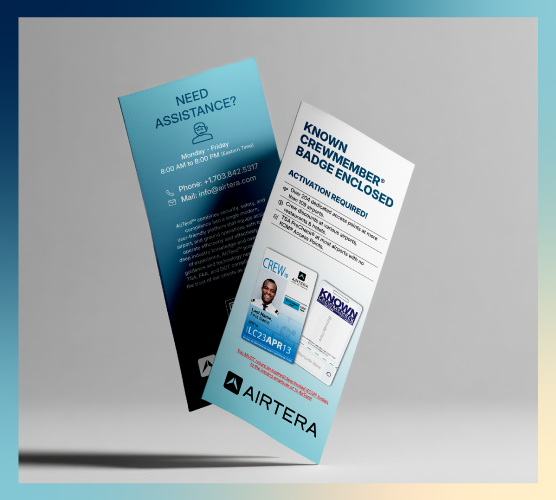
The Known Crewmember® (KCM®) Program from AirTera provides eligible flight crew with expedited access through dedicated security access points at participating airports, eliminating the need to wait in standard TSA or PreCheck lines and helping crews reach their aircraft faster. Managed through a secure platform, the program includes compliant ID badge access, entry to designated crew lanes (with fallback to PreCheck when needed), and additional perks like airport and partner discounts. AirTera also simplifies badge management with tools to authenticate credentials, renew or reorder badges, generate reports, and maintain inspection documentation. As the industry evolves, KCM® is expected to transition into the new Crewmember Access Point (CMAP) program, with enhanced features such as biometric verification and passport-based identification, all supported within the same streamlined platform.
CrewID™
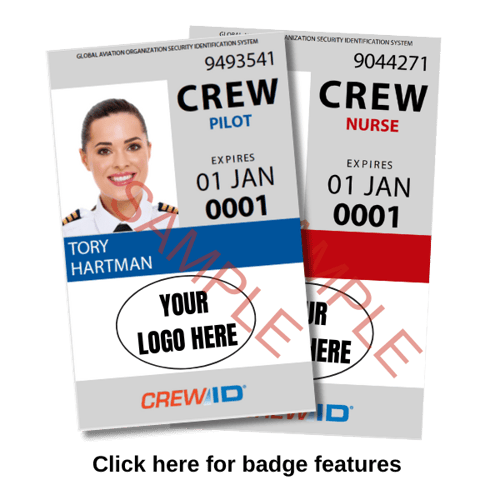
CrewID™ is AirTera’s global crew credentialing and identity verification solution, designed to give aviation organizations a secure, real-time way to validate personnel anywhere in the world. More than just a photo ID, the CrewID™ badge connects to a centralized system that verifies credentials, training, employment status, and crew roles on demand, supporting operators, FBOs, MROs, and flight departments 24/7/365. The platform streamlines how companies issue and manage badges while enabling crews to instantly present verified credentials to third parties when needed. Additional benefits include access to crew lanes at select locations, integrated security awareness and DHS Blue Lightning Initiative training, and eligibility for industry discounts at airports, hotels, and restaurants. Built to connect and standardize identification across the aviation ecosystem, CrewID™ helps organizations improve security, compliance, and operational efficiency through a single, trusted credential.
Other Solutions for Operators
Explore a comprehensive suite of aviation solutions covering key FAA certifications and operations, including Parts 121, 125, 135, 139, 145, and 91/91K. This overview highlights how our solutions support operators, airports, repair stations, pilots, and training programs with clear guidance, streamlined compliance, and operational efficiency across the aviation ecosystem.
Part 125/135 Operators
Part 135 and Part 125 FAA certificate holders use aircraft for chartered flights; the difference between the two certificates is the size of the aircraft used.
Some airports hold a FAA Part 139 airport operating certificate. These airports serve scheduled and unscheduled flights on aircraft with more than 30 seats.