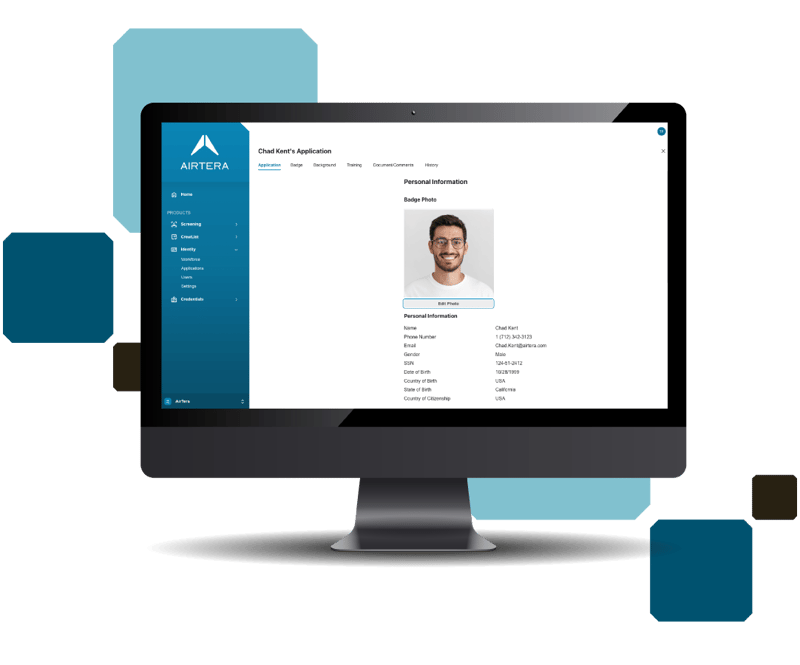
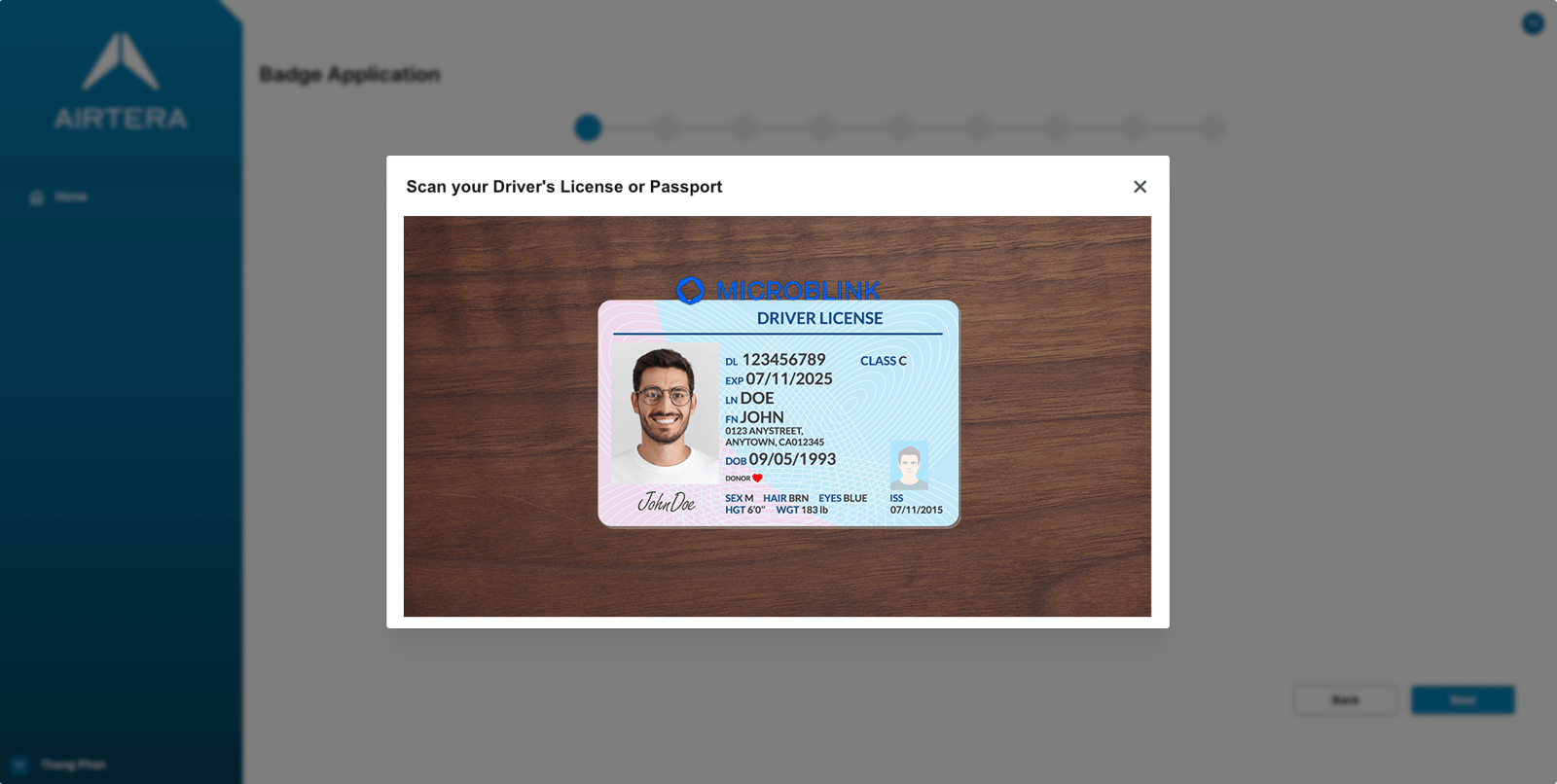
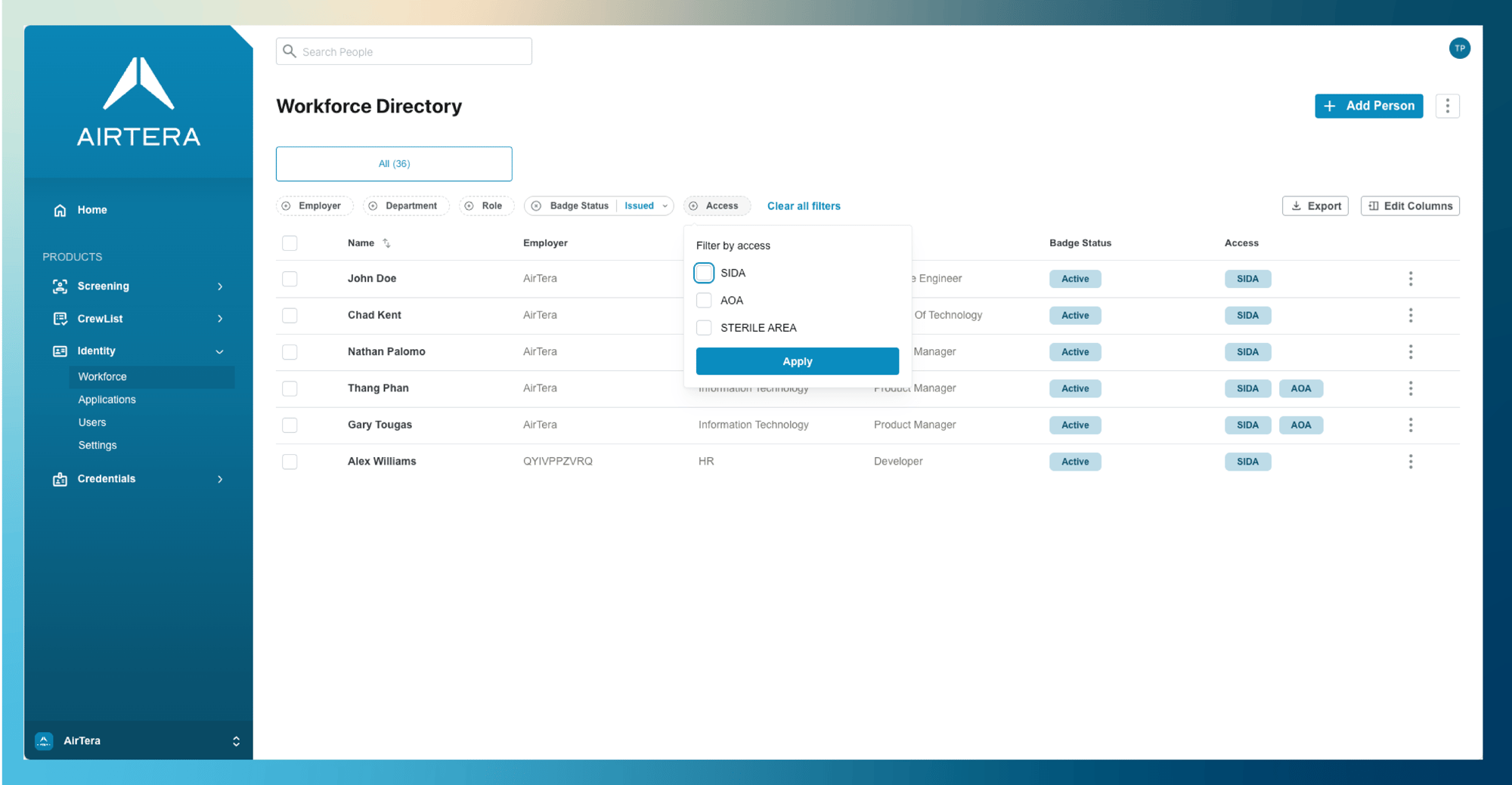
Most airport and airline credentialing systems are outdated and rely on paper packets, spreadsheets, and disconnected tools. AirTera IDMS replaces these manual processes with a modern platform that digitizes and streamlines the entire badging and vetting workflow from application initiation to badge issuance, renewal, and deactivation.
Our system leverages artificial intelligence to streamline your operations and minimize manual data entry. Smart automation reduces the number of clicks required, allowing your team to focus on what matters most
Intelligent form auto-completion
Predictive data entry based on patterns
Automated decision-making for routine tasks
Context-aware suggestions throughout workflows
Reduced administrative burden
Mobile-Responsive Design
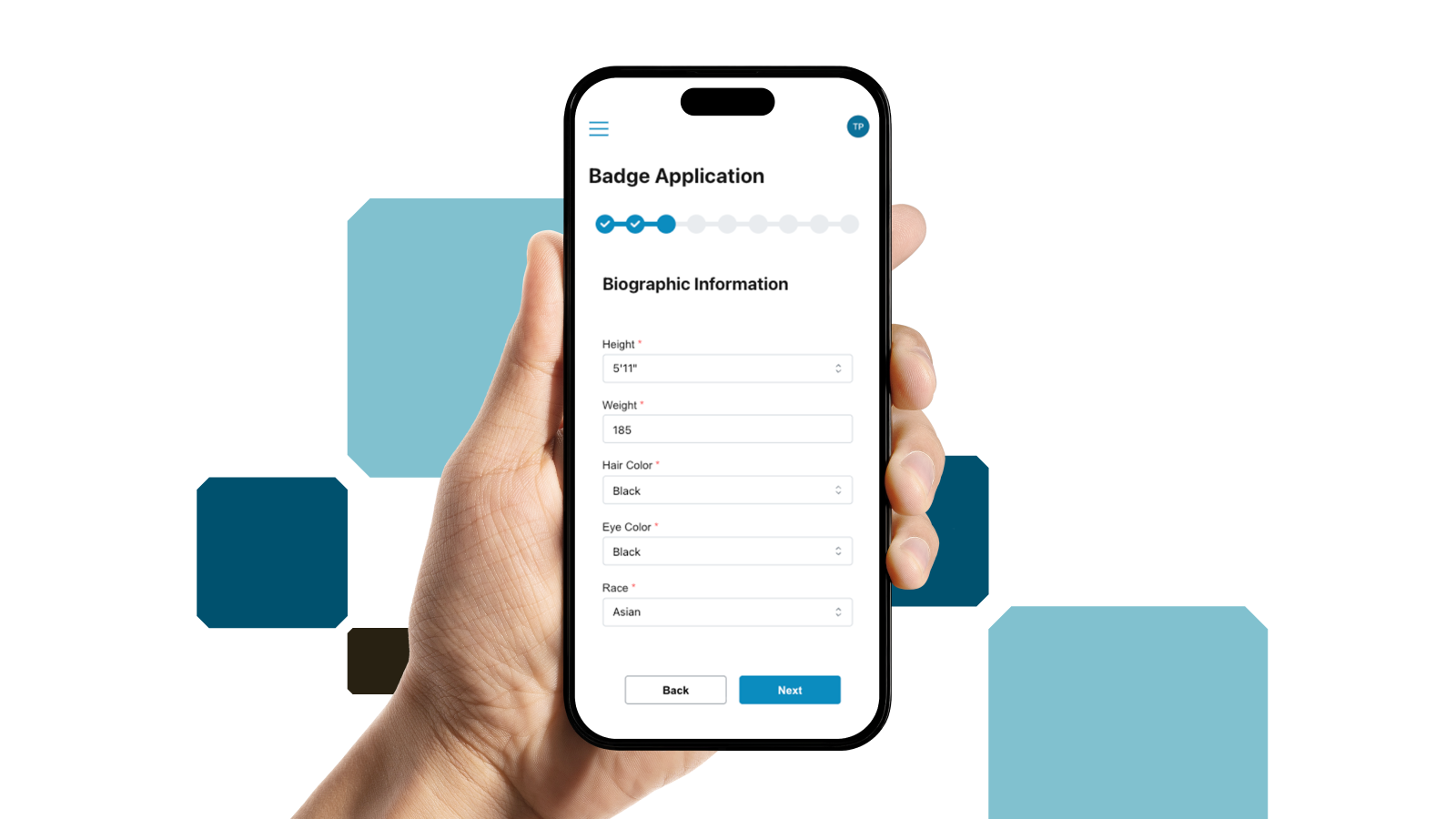
Badge holders can complete their entire onboarding process directly from their mobile devices. Our fully responsive platform enables seamless mobile selfie capture, making credential verification faster and more convenient than ever.
Native mobile experience on any device
Mobile selfie capture with real-time validation
Touch-optimized interface for easy navigation
Complete workflows on-the-go
Works seamlessly across iOS and Android
Fully Customizable Platform
Every aspect of our system adapts to your unique requirements. Configure workflows, customize background check processes, and tailor the entire platform to match your organization's specific compliance needs.
Flexible workflow configuration
Custom background check integrations (CHRCs and more)
Configurable approval processes
Branded user experience
Adaptable to any industry or regulatory requirement
Other Solutions for Operators
Explore a comprehensive suite of aviation solutions covering key FAA certifications and operations, including Parts 121, 125, 135, 139, 145, and 91/91K. This overview highlights how our solutions support operators, airports, repair stations, pilots, and training programs with clear guidance, streamlined compliance, and operational efficiency across the aviation ecosystem.
Part 125/135 Operators
Part 135 and Part 125 FAA certificate holders use aircraft for chartered flights; the difference between the two certificates is the size of the aircraft used.
Some airports hold a FAA Part 139 airport operating certificate. These airports serve scheduled and unscheduled flights on aircraft with more than 30 seats.