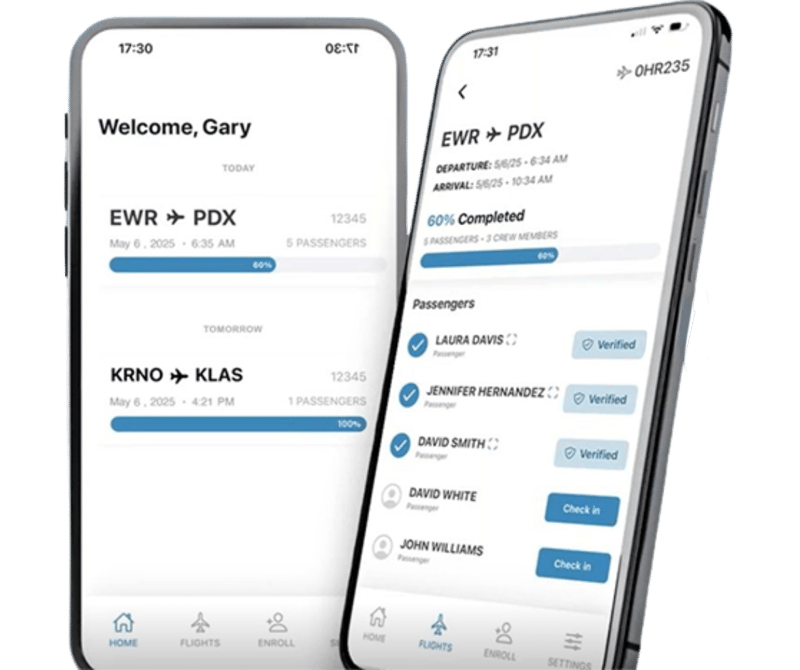
Business aviation still relies on manual ID checks, paper manifests, and disconnected communication, creating delays and risk. AirTera’s DepartureCheck replaces these outdated processes with a secure, biometric, mobile-first solution that verifies passengers in seconds, reduces delays, strengthens security, and provides real-time visibility within the flight management system.
Biometric Passenger Verification, Built for Private Aviation
DepartureCheck is the first biometric passenger identity verification solution designed exclusively for Part 91 and Part 135 operators. Purpose-built for ramp environments and private charter workflows, it replaces manual ID checks with fast, touchless verification—no fixed hardware, no airport infrastructure.
Using advanced facial recognition, DepartureCheck verifies passengers in seconds, reduces boarding delays, and provides crews with real-time passenger status inside their flight management system. The result: stronger security, smoother departures, and more time focused on flight readiness.
Key Advantages
Touchless identity verification in seconds
Real-time boarding visibility for crews and operations
Mobile, ramp-ready design for private aviation
Automated REAL ID and fraud detection
Secure, audit-ready digital records
Fast for Crews. Secure by Design.
How It Works
One-Time Enrollment: Under 60 seconds per passenger using a mobile device
Face Capture: Quick facial scan replaces manual ID inspection
Instant Verification: Identity and manifest alignment confirmed in real time
Cleared to Board: No documents, no delays
Privacy & Compliance First
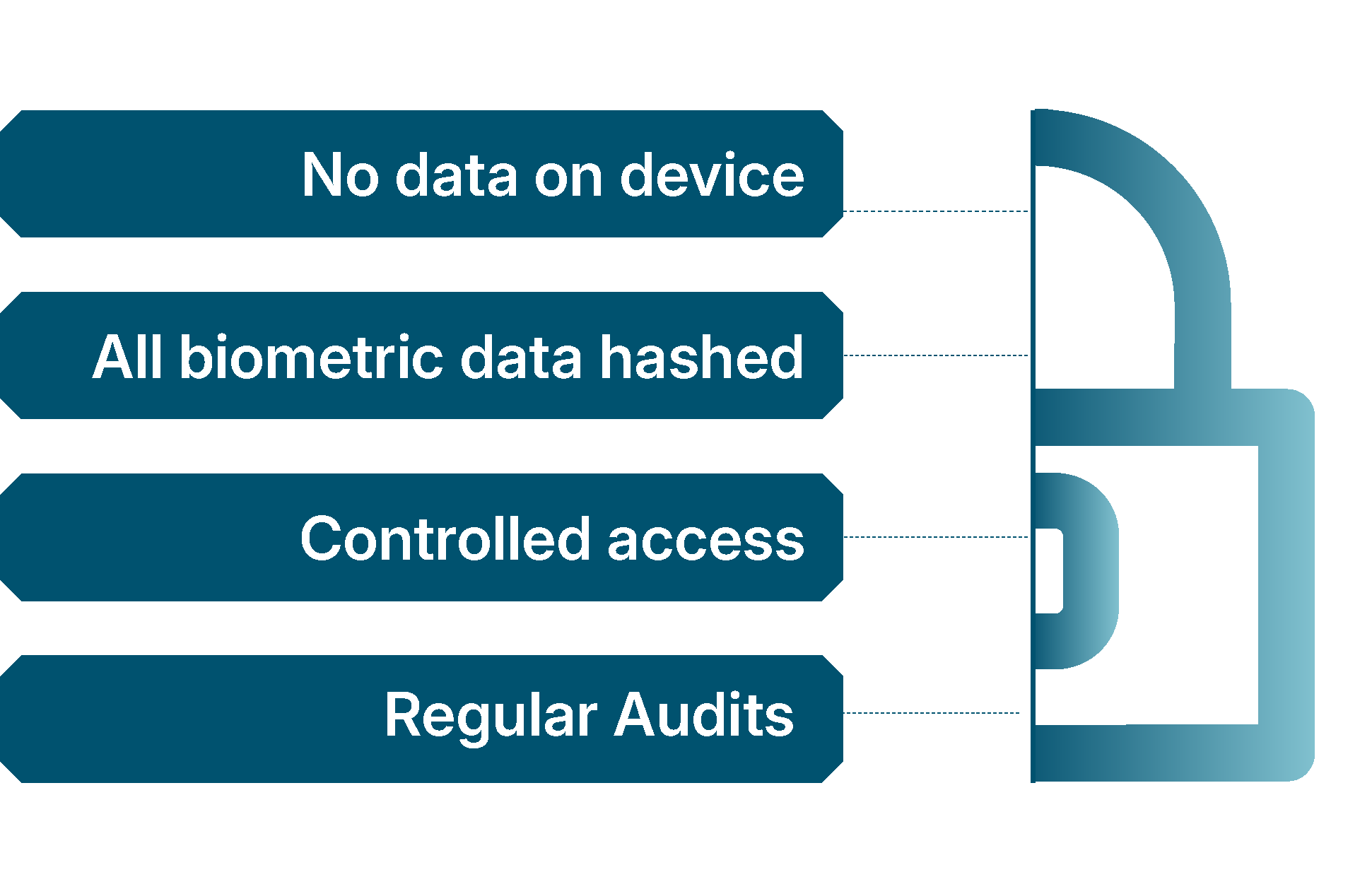
No personal data stored on mobile devices
Biometric data securely hashed and non-reversible
Controlled system access with regular audits
Passengers may opt out at any time, allowing crews to complete a traditional ID check without disrupting boarding or workflows.
Other Solutions for Operators
Explore a comprehensive suite of aviation solutions covering key FAA certifications and operations, including Parts 121, 125, 135, 139, 145, and 91/91K. This overview highlights how our solutions support operators, airports, repair stations, pilots, and training programs with clear guidance, streamlined compliance, and operational efficiency across the aviation ecosystem.
Part 125/135 Operators
Part 135 and Part 125 FAA certificate holders use aircraft for chartered flights; the difference between the two certificates is the size of the aircraft used.
Some airports hold a FAA Part 139 airport operating certificate. These airports serve scheduled and unscheduled flights on aircraft with more than 30 seats.